copyright © Wartime Heritage Association
Website hosting courtesy of Register.com - a web.com company
Wartime Heritage
ASSOCIATION

The Battle of Anzio
January 22, 1944 - June 5, 1944

Remembering World War II
The Battle of Anzio – Operation Shingle and the casualties with a Nova Scotian connection
January 22, 1944 - June 5, 1944
Anzio, launched on 22 January 1944 as Operation Shingle, was an ambitious
Allied attempt to break the deadlock south of Rome by landing the Allied forces
of the U.S. VI Corps (3rd Infantry Division, Rangers, paratroopers, support
units), the British 1st Infantry Division, and Commandos and supporting
formations, behind the German Gustav Line.
The beaches around Anzio and Nettuno were almost undefended, offering a
fleeting chance to seize the Alban Hills, the key high ground controlling the
German supply routes. Instead, VI Corps commander Maj. Gen. John Lucas
chose to consolidate the beachhead rather than push inland, a cautious
decision that allowed German commander Albert Kesselring to rush
reinforcements to the area.
Within days, the Germans had encircled the beachhead, transforming what
might have been a rapid advance toward Rome into a four month siege marked
by relentless artillery fire, trench like conditions, and heavy casualties.
Amid this crisis, the 1st Special Service Force, the bi national Canadian American unit later known as the “Devil’s Brigade” played a
critical role. Vastly outnumbered, the Allies relied on the Force to hold an unusually long stretch of the defensive line.
During the battle, through aggressive patrolling and daring night raids, the 1st Special Service Force (FSSF) the elite joint
American–Canadian commando unit created the illusion of a much larger presence, helping to deter German attacks during the most
precarious phase of the siege. Their actions were instrumental in preventing a breakthrough that could have crushed the entire
beachhead.
Only in May 1944, with a renewed Allied offensive launched both from Anzio and along the Gustav Line, did the stalemate finally
break, opening the road to Rome.
Nova Scotians Buried at the Beach Head War Cemetery
Four casualties with ties to Nova Scotia are interred at Beach Head War Cemetery. All four served with the Canadian Special Service
Battalion, the Canadian component of the 1st Special Service Force (FSSF), the elite commando unit known as the Devil’s Brigade or
the Black Devils. German soldiers reportedly coined these names in response to the unit’s stealthy night raids, blackened faces to
camouflage themselves, and reputation for appearing “out of nowhere.” The FSSF arrived at Anzio on February 1, 1944.
James Donald Schofield
Killed in Action on March 13, 1944. (Age 19)
Michael Joseph Ryan
Killed in Action on May 28, 1944. (Age 28)
Daniel Cummings McMasters
Killed in Action on May 23, 1944. (Age 20)
Daniel Serrick
Killed in Action on May 29, 1944. (Age 23)
Other Casualties with Nova Scotian connections of the Anzio Campaign:
In addition to those buried at Beach Head, three other men with Nova Scotia ties died in connection with the Battle of Anzio. Two
are interred at the Sicily–Rome American Cemetery, and one, Joseph Rudolph, is buried in his hometown of Medford, Mass.
Joseph Cyril Rudolph
Killed in Action on February 7, 1944. (Age 20)
Sergeant Raymond Curtis Balser
Killed in Action on February 18, 1944. (Age 30)
Leo Joseph Comeau
Killed in Action on May 22, 1944. (Age 27)
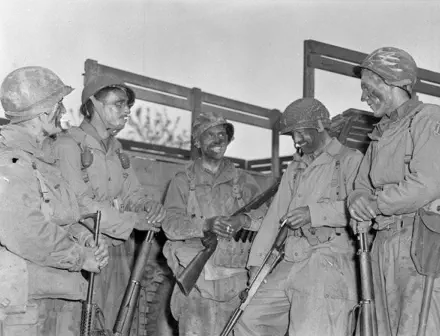
Canadian 1st Special Service Force troops relaxing near Anzio, Italy, 20-27
Apr 1944
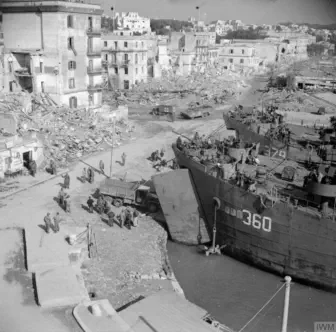
IWM (NA 12136)






- World War I - Menu
- WWI Stories and Articles
- Photos - Yarmouth Soldiers
- Selection of World War I Songs
- WWI Casualties of Yarmouth, NS
- Those Who Served - Yarmouth, NS
- WWI Casualties Digby Co. NS
- WWI Casualties Shelburne Co. NS
- Merchant Mariners (1915) Yarmouth, NS
- Canadian Forestry Corps - Non Yarmouth Birth/Residence Enlistments
- US Draft Registry - Yarmouth NS Born


- World War II - Menu
- WWII Stories and Articles
- Telegraphist Air Gunners
- WWII Casualties of Nova Scotia
- US Casualties with NS Connection
- Far East/Pacific Casualties with NS Connection
- Merchant Navy Casualties Nova Scotia
- Nova Scotia WWII Casualties Holten Canadian War Cemetery
- D-Day Casualties - Nova Scotia
- CANLOAN Program Casualties - Nova Scotia
- Battle of the Bulge Casualties - Nova Scotia
- WWII Casualties Yarmouth NS
- Yarmouth Casualties - RCAF RAF Canadian Army WWII
- Yarmouth Co., Marriages WWII
- Casualties Non-Born/Residents with Connection to Yarmouth Co., Nova Scotia.
- WWII Casualties Digby Co., NS
- Non-Nova Scotian WWII Casualties Buried in Nova Scotia
- WWII RCAF Casualties Aged 16-18
- Brothers/Sisters Who Served - World War II