Wartime Heritage
ASSOCIATION

copyright © Wartime Heritage Association
Website hosting courtesy of Register.com - a web.com company
Wartime History of Yarmouth NS
East Camp - RCAF Station Yarmouth - WWII

Telegraphist Air Gunners
RCAF Station Yarmouth - East Camp - WWII
During the Second World War, the coastal town of Yarmouth, Nova Scotia, played a vital
role in the Allied war effort as the site of RCAF Station Yarmouth. Established in 1940
under the British Commonwealth Air Training Plan (BCATP), the station was divided into
West Camp and East Camp. While West Camp focused on bomber reconnaissance
operations for submarine defense, East Camp developed into a critical hub for training
Telegraphist Air Gunners (TAGs) of the Royal Navy Fleet Air Arm.
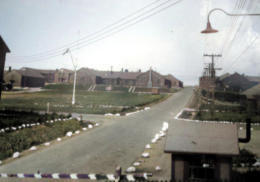
East Camp, situated near Chebogue Road in Arcadia, spanned approximately 20 acres
and featured more than 40 buildings constructed with local labor and materials.
Designed as a self-sufficient military outpost, it included hangars, barracks, classrooms,
mess halls, and recreational areas, all tailored to meet the intense demands of specialized aircrew training.
Telegraphist Air Gunners were a unique category of naval aircrew who combined two essential wartime skills, wireless
communication, and aerial gunnery. Operating mainly from the decks of aircraft carriers, TAGs maintained radio contact with
naval vessels and defended aircraft against enemy fighters. Their ability to perform these dual tasks made them indispensable
in the complex and hazardous environment of maritime aviation.
The training program at East Camp reflected a deep collaboration between the Royal Canadian Air Force and the Royal Navy.
While British officers and instructors delivered technical training, the RCAF was responsible for camp operations,
administration, logistics, and medical services.
The 10-month training curriculum focused on Morse code proficiency, radio operations, weapons handling, naval protocol, and
flight experience in aircraft such as the Fairey Swordfish and Avro Anson. Instructors and pilots hailed from across the
Commonwealth, including Canada, New Zealand, and the UK, reinforcing the international character of the mission.
From 1942 to 1945, East Camp successfully trained 570 Telegraphist Air Gunners, who later served in a wide array of theaters,
from the Atlantic convoys to the Pacific campaigns. Their role was not without great sacrifice: 495 TAGs lost their lives, and 69
were captured as prisoners of war.
Despite the intensity of their training, East Camp personnel enjoyed recreational outlets and social connections with the
surrounding community. Local events, sports days, dances, and summer outings, such as those at Braemar Lodge, helped foster
camaraderie and lasting friendships between the airmen and the residents of Yarmouth.
When the war ended in 1945, East Camp was decommissioned, and RCAF Station Yarmouth gradually transitioned into a civilian
airfield. Yet during its brief but impactful wartime tenure, it had served as a linchpin in Allied naval aviation training and stood
as a symbol of international cooperation, community support, and shared sacrifice.
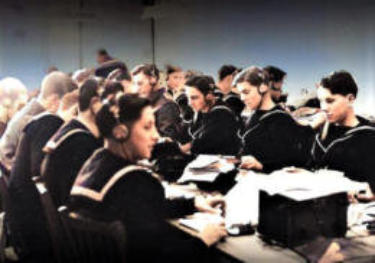
Learning Telegraphy
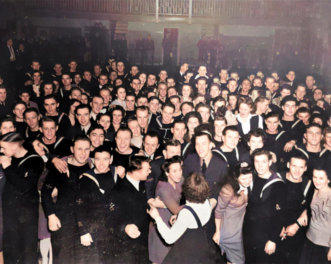
Dance at East Camp - December 27, 1944
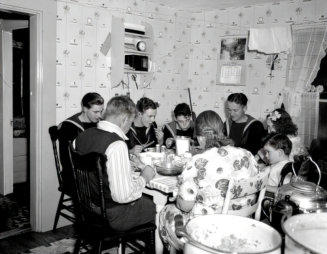
Enjoying a deer steak dinner as guests of the Crosby
family, Port Maitland, October 1944





- World War I - Menu
- WWI Stories and Articles
- Photos - Yarmouth Soldiers
- Selection of World War I Songs
- WWI Casualties of Yarmouth, NS
- Those Who Served - Yarmouth, NS
- WWI Casualties Digby Co. NS
- WWI Casualties Shelburne Co. NS
- Merchant Mariners (1915) Yarmouth, NS
- Canadian Forestry Corps - Non Yarmouth Birth/Residence Enlistments
- US Draft Registry - Yarmouth NS Born


- World War II - Menu
- WWII Stories and Articles
- Telegraphist Air Gunners
- WWII Casualties of Nova Scotia
- US Casualties with NS Connection
- Far East/Pacific Casualties with NS Connection
- Merchant Navy Casualties Nova Scotia
- Nova Scotia WWII Casualties Holten Canadian War Cemetery
- D-Day Casualties - Nova Scotia
- CANLOAN Program Casualties - Nova Scotia
- Battle of the Bulge Casualties - Nova Scotia
- WWII Casualties Yarmouth NS
- Yarmouth Casualties - RCAF RAF Canadian Army WWII
- Yarmouth Co., Marrages WWII
- Casualties Non-Born/Residents with Connection to Yarmouth Co., Nova Scotia.
- WWII Casualties Digby Co., NS
- Non-Nova Scotian WWII Casualties Buried in Nova Scotia
- WWII RCAF Casualties Aged 16-18
- Brothers/Sisters Who Served - World War II