copyright © Wartime Heritage Association
Website hosting courtesy of Register.com - a web.com company
Wartime Heritage
ASSOCIATION

Journey to Siberia - World War I
Letters of Private John Edward Boudreau
September 27th, 1918 [First Letter]
“We were issued with each a paper bag
with writing tablet and a dozen
envelopes and boxes of cigarettes and
three boxes of matches and two
chocolate bars, and a package of gum
and boxes of polish.
I will write as we go along. We are going
to stop at Moncton for a lunch and
beyond that we will have a dining car
with us. We're just leaving. It's 9:20 am.
I think if I write all the way along, it will
be some letter. We just stopped at
Petitcodiac, the first station since we
left Sussex.
We now have just stopped at River Glade at 10:30 AM. The river follows the track quite a way. The next station is
Salisbury. That is a place about like Arcadia. It is mostly woods along here. Every here and there is a little village.
We just stopped at Foundry Creek. It is now 10:50 AM. Frank Pothier from Eel Brook is with us, and he certainly
can play a violin. He has been playing since we left.
We are now at Moncton. We have been here for two hours ever since 11:00 AM and now it's 1:00 PM. We are eating
dinner now. I just got through … You talk about your dinner. We had tomato soup and all the bread we wanted, and
each one big potato and two slices of meat and coffee and rice pudding, and the cooks told us … to ask for
anything we wanted. The dining car is on front.
It is pouring rain, but we have a good roof so let it rain. They can only feed 30 at once and we are 150 aboard. If
they feed us that way all the way out, we will be fat enough to kill.
The officers gave us speeches last night. The priest at Sussex is a Frenchman. He is also a captain in the army. He
told us that we would all come back, but we would come back through Russia and France and England. So, we [will
go] all around the world. They also told us last that this was the biggest honor that had been yet. That priest’s
name was Father Beliveau from New Brunswick. He told us he could talk every language. He also made a speech in
French.
We are a happy crowd. Everybody that comes from dinner are all smiling and talking about the good dinner. We
also had tablecloths on the tables. A dinner like that would cost about $1.00.
I will stop writing for awhile. I think I will mail it in Ottawa. We’ll be there Sunday if nothing happens.
Just left Moncton and it's 3:00 o'clock. We have been here four hours, and we were not allowed to get out of the
train, but it seems to be a nice place.
I just had my supper. We had vegetable stew, and it was not all water and we had beans and good tea and all the
bread we wanted and cheese.
We just stopped at Newcastle about 10 minutes. That is a nice place. Just before we got there, we passed two big
bridges over big lakes. It is all woods and mostly low and scrawny.
We are going through Bathurst now. We stopped there about 15 minutes. That seems to be quite a place. I had
three cards, wrote one to Lewis Harrington and one to May and Bertha. It is hard to write on the train. It moves so
much. I just mailed those cards.
Well, it will soon be dark now. It's 7:30 pm.
September 28th. 1918.
Just got up. It's 8:00 am. … We went by Quebec through the night. We will be at Montreal around 5:00. o'clock,
they say. I had a good sleep. It was 11:30 when I turned in last night.
They have started eating breakfast. It is still raining. It's been raining since yesterday morning. I would like to
have a railroad map so I could find out the miles we've traveled. Just got through breakfast. We had potatoes,
bacons, sausages, porridge, bread, and coffee. We went by a place this morning called Saint Nicholas. And just
went by another place called Laurier. I saw a new Catholic church that was built in 1915. Between every one of
these villages, it's all woods and swampy.
We are stopped again, taking water. There is a big brook running through here and we're right on the bridge.
There is another small Catholic church right close to the track. This is about the smallest place I've seen. There
are only five or six houses. We were hung up this morning in the woods, about an hour. One of the rails of the track
was broke.
It is 10:45 am. We are at a little place and it's 116 miles from Montreal. We are now at St. Leonard Junction, and
it is 12:00 o'clock. This is quite a place. There are tracks going different directions. Since this morning I never saw
any hills. It is all low level land as far as you can see.
we are now at Saint Cyril. This is also quite a place and a nice big church. It is now 12:30. We are about six hours
late. We should have been in Montreal this morning and we will not be there until about two this afternoon.
Montreal, 5:30 pm.
We are just leaving Montreal. We arrived here at 2:00 pm. I hollered so much that my voice is hoarse. We had to
change trains. We marched about 1/4 mile up to the CPR. You talk about your big station, and the people followed
us up there. They stopped us for a rest right in front of a bar room, but we could not break the lines. It's a good
thing we could not.
Just before we came to Montreal, we passed over the biggest bridge in the world, over the Saint Lawrence River. It
must be three miles long, and we were about ten minutes going over it and the train was going pretty fast.
We're getting out of the city now. There are big farms on both sides.
We have just arrived at Ottawa and it's 10:00 pm. It is dark. You cannot see anything but lights. We are leaving
some of our men here. They are signallers, forty of them.
I wish it was day time so we could see. There are a few girls. Here around the train. I think they're good ones, by
the way they act here with the boys. It seems to be busy here around the station, all you see is trains going back
and forth.
There are boys from Montreal and Ottawa coming with us. There're two or three drafts gone overseas. Now, I was
going to mail this letter here, but I think I will wait until we get to Victoria so I can give you, my address.
I just heard we were going to be here two hours and we were going to have an inspection. There were three boys
taken sick on the way over.
Sunday Morning, September the 29th, 1918
10:00 am. We are now at North Bay, Ontario. We certainly did some traveling last night. I was on guard on one end
of the train, that was so none would get off the train. But, as careful as they are there are, there were two guys
who got clear at Montreal.
We just went by a little town. 12:00 AM Just left Salisbury, Ontario. We stopped there about half an hour. They
took us out for a march, and they took the Catholics into the station, and we had Mass there. New paragraph that
is a big city. They were a lot of people at the station.
7:15 pm. Just left a place called, Chapleau. It's quite a place and there were lots of people there, mostly girls.
We stayed there one hour. You talk about noise. We were all hollering at the girls. It's all forest here. It is quite
cold here. They most all have mittens or gloves on.
It is full of little lakes and rivers all along through the woods.
Monday, September the 30th.
We just got breakfast and we are at Port Arthur, Lake Superior. This is a nice place. There are big piers. and ships
and vessels, factories, and it's only ten minutes run to Fork Williams. I just bought some ____. I will send some
home. I will mail them as soon as I get them wrote.
We just had a march in the city of Fort Williams. That is about the neatest place I’ve seen yet.
Winnipeg 8:30 pm.
We are just leaving. We stopped here one hour. The streets here put me in mind of Boston. All kinds of moving
lights. But we did not see much of that, only when we left. we were stopped at the station and all we could see
was trains. There is nobody allowed around the trains. When we got by the station, the girls were on the fence
everywhere. They say that we are about halfway to Victoria. We have been on the train now four days and three
nights. Well, this will be all for today.
October 1st, 1918, Tuesday .
9:00 am. We arrived at Regina. We stopped here about half an hour, and we are going though farms again another
big place. For the last two days we have been running through farms and there are farms just as far as you can
see. It's just as level as can be and wheat piled up everywhere and they have the thrashers right in the field.
There are quite a few women working in the fields. I don't wonder they want men for harvesting.
We are just leaving Regina. We stopped here about half an hour, and we are going through farms again. I just saw
a machine for loading hay. There was a guy from Pubnico with [us] and when we saw it, we laughed. I am sure we
can see about five miles each side [of the train] and all we can see is wheat.
At 10:30 am we stopped at Moose Jaw. There we went out for a march. Just as soon as we got off the train there
were women there with cigarettes, and while marching along the streets there were some men that would give us
some more. And, at one end of the station there [is] a restaurant. There were four girls working there and one
came out with a box of cigars. Of course, we did not each get one, but I got one.
That is another big and neat place. The climate is quite warm here.
Wednesday, October 2, 1918
7:30 am. When I woke up this morning, we were stopped at a station at Calgary. It was dark so we could not see
anything, but the station was a big one and we have to get up at 5:30 mornings and eat breakfast at six.
We are going along close to the Rocky Mountains. They say we will follow them all day, and we also have a tunnel
to go through, three miles long.
There are lots of the boys taken sick. They left twenty off at Winnipeg at the hospital and two more last night at
Medicine Hat.
We only have one more big city to go through. They think we will get to Victoria tomorrow. We are still among the
mountains. We passed through seven tunnels. One of them was three miles long, the others were only about half a
mile.
We had another march today, and we also passed over some high bridges. I think we will arrive tomorrow morning.
We only have 200 miles more to travel.
Friday, October 4, 1918
9:30 AM. We have arrived [at] Westminster. We are thirty miles from Vancouver, and one hundred and fifty miles
from Victoria. We stopped here on account of sickness, and we are staying at a hotel. We arrived here yesterday
morning and we were all quarantined.
This is only a small place and there is a big hotel back from the town and it's a big one and they use one part for a
hospital, and we are in the other part. It is a nice hotel. It never run since it's been built and it's full of rooms.
There are four of us to a room, and we have spring beds and mattresses. New beds. I got one last night, the paper
was on it yet and in the case and the mattress also. And there hot and cold water in every room. I do not know
what they built it for. They say the man that built it went crazy after he built it, but I think he must have been
crazy before he started it.
Yesterday we pitched a few tents, and they are building cook houses. They say we are here for twenty-one days
and if anyone breaks out sick, we will be quarantined twenty one more, but I don't mind staying here.
We also have electric lights in every room. This hotel is in the woods. It is about one mile and a half from the
station. We are still eating at the train. We just got back from breakfast.
Well, I will close and send you my address so you can write just as soon as you receive these letters. Goodbye. My
address is Private Edward Boudreau, 260 Can. Rifles, CEF Base Guard, Westminster, BC.
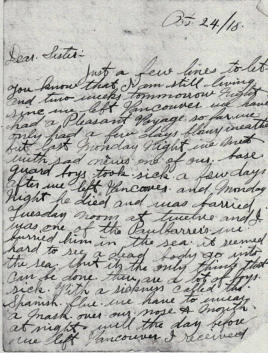
October 24, 1918. [Second Letter]
Dear Sister
Just a few lines to let you know that I am still living and two weeks
tomorrow night since we left Vancouver. We have had a pleasant voyage.
So far, we only had a few days blowy weather.
But last Monday night we met with sad news. One of our base guard boys
took sick a few days after we left Vancouver. Monday night he died and
was buried Tuesday noon, and I was one of the pallbearers. We buried
him in the sea. It seemed hard to see a dead body go into the sea, but
it's the only thing that can be done. There are a lot of boys sick, with
the sickness called the Spanish flu. We have to wear a mask over our
nose and mouth at night.
Well, the day before we left Vancouver, I received four letters from down
home. It had been quite awhile that I hadn't had any. I certainly felt
happy when I received them.
They had us in a big building for two or three days signing papers and it was tiresome standing around doing
nothing and I did not hear the mail call out, but one guy took my mail and gave it to me while we were waiting, so
it was a good pastime for awhile. And the first Sunday we were on the boat, they called out some more mail and I
had another one.
We left on Friday at six o'clock and we did not see land until Saturday. We went by some islands; we saw them one
day and we did not see land again until this noon. We see it, but it's quite a way off.
We get pretty good grub aboard and not much work. We get about two hours physical drill every day. It [doesn’t]
cost us anything to send letters now. We give them to our commanding officer to be censored and we bother about
stamps. But I am going to give this letter to a friend of mine, the signaller aboard the ship. He takes me in his
room. I am there most all the time and he said he would mail all my letters at Vancouver so they would not be
censored. This ship is going right back again after another load. I will not finish this letter until we are about to
land just so I can give it to him before we land.
I am going as cook when we get there. They picked out four of [us] for cooks. So, that will be a good job. It will be
warm.
Yesterday they picked out about fifteen men for
batsman. If I had not been detailed for the cook-
house. I would have gone but I would sooner be in
the cook house. I am looking for something to eat,
(ha ha!)
Hereafter I will have to be careful what I put in my
letters.
The whole base guard are staying together in one
room. There are seven big, long tables and there
are each a hammock to sleep in. When it's rough we
get rocked to sleep but they are also close together
as they can be, so they all [rocked] together.
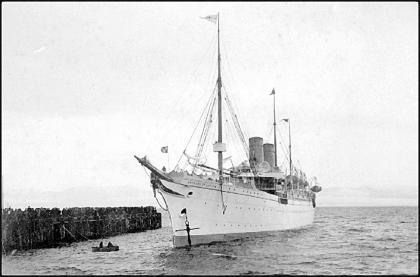
The name of the ship is the Empress of Japan. I would like to get the pictures of her and send it home. I will try
and get it.
Well. I have been sea sick a few times. It is not very cold yet.
We were all issued with rifles aboard and our equipment and today we had an inspection on packing our kits, two
blankets and mackintoshes.
Edgar Surr [Surette]
1
did not come with us. He will come with the next bunch, but I have two chums, one from Eel
Brook and one from Pubnico. The one from Eel Brook has a violin and he certainly can play. We have some good
times, at times all the crew of the ship. But the Officers are Chinese and the cooks as well. They make candy with
peanuts in them and cakes and sell them the us on the slide. They make quite a few tips. We have a canteen
aboard … they sell beer, candy, and gum.
We were paid Tuesday; each five dollars and they gave us each a new pay book.
There are only about 800 soldiers aboard. We each had a bath yesterday and changed clothes. I had not changed
for four weeks. Now I have two suits, dirty. But if I'm in the cook house, I will have a good chance to wash them
clean every now and then. I have to darn my socks. I don't take them off, I just darn them on my feet.
We have a good bunch of officers with us. We have even a general with us. His name is General Elmsley and he's a
good man. That is the beauty of the army when you have good officers.
We have just passed by an island. It was covered with snow. It is blowing quite a breeze, and now we just came
down from on deck. The water was flying on us at times.
The money that I signed to father will start this month. He will get it
about the first of November and if he don't get it, let me know when [you]
write.
October 25th. We are now in the Japan Sea. We passed the Straits of
Japan early this morning. They say we will be there tomorrow morning. I
will write again as soon as we get settled down. I will have to close so I
can give it to my chunk tonight. Please keep on writing and I will write
every time I get a chance and give the folks my address and tell them to
write.
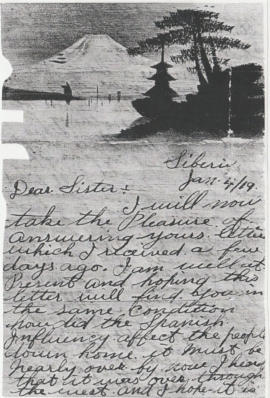
Siberia, January 4, 1919 [Third Letter]
Dear Sister
I will now take the pleasure of answering your letters, which I received
a few days ago. I am well at present and hoping this letter will find you
in the same condition.
How did the Spanish Influenza affect the people down home. It must be
nearly over by now. I hear that it was over through the west, and I
hope it is over down home, for it is an awful thing to catch. I was lucky
that I did not catch it, for some of the boys were taken with it on the
train and also on the boat, but no one has been taken with it since
we've been here.
Well, Christmas and New Years has gone by. I suppose you spent a Merry
Christmas. We had a pretty good time and we had lots of work,
especially in the cook house. We had nineteen geese to cook for dinner,
and we also had candy and nuts, and each a little Christmas bag
containing a pair of socks, a handkerchief, and a few more little things,
and also each a drink of rum. So, we spent a good Christmas. after all,
and New Year's Day was the stormiest day. I think I ever saw. The wind
was blowing a good breeze and most all the buildings are roofed with
tin and the tin was blowing all directions and snowing so you could not
look to the wind.
But that is nothing. It's almost a fright to see the poor people around
here. Our barracks are across the street from the railway station and
there are a lot of poor people who were drove away from their homes
and they all stay in the station.
Lots of them have nothing to eat and hardly any clothes to wear. There
are about four hundred in the station and all the old buildings are full.
They are all mixed together and any where from six months to ninety
years old, and they’re running around the streets begging for something
to eat.
What I pitied the most was one morning; it was about twenty below. Frank Pothier and I were getting dinner when
in came a woman with a little girl, about six or seven years old, carrying a little sugar bag of grub, and the poor
little girl had scarcely any clothes on, and no stockings, and an old pair of shoes about twice too big for her, and
no laces and bare hands.
So, I took the little girl and almost put her into the oven and after she was warm, I gave her a pair of my socks,
which I brought from home. The heel came up over the tops of her shoes and the legs came up above knees and I
tided them up with string. I also gave her a sweater and I put her old, ragged overcoat over that, and we gave her
a good feed. Her mother had a little baby that could not walk, and it had nothing on but just a little thin dress.
So, the rest of the boys fitted them out. Those people, they call them refugees.
We have one hundred and eleven men here and there is only Frank Pothier and myself and we have a helper.
Frank was taken with a cold and sore throat, so he went to the hospital. He's only been there three days and he's
coming out tomorrow. It keeps us quite busy. We have to cut our own wood and carry our water, but we have every
night off. We have a night cook, a French guy from Toronto.
We have a pretty good time here but still; we cannot get into any conversations with the people here. We
sometimes meet one that can talk English or French, but very seldom. I was in the theatre sometime ago. They
were showing vaudeville. Everything was in Russian [in] the seat before me there was an old couple there and
they were a couple of French follows with me. And I suppose he heard us talking French, so he turned around and
spoke to me in French. He did not speak very good French, but I could understand almost every word. He had lived
in Paris, France, but he had been here for nineteen years, and he had never spoken a word of French since. He
would tell me about the show, of what they were saying. I enjoyed it very much.
The Americans have a big YMCA building and there is always something going on there, moving pictures, and they
have quite a few concerts. There is a British battleship, the Suffolk. She is going home in a few days and last night
and tonight they are giving a concert, and all the nationalities have parts in it. There are Canadians, British,
Americans, Japanese, Chinese and Czechs, Slovaks, both soldiers and sailors.
I attended there last evening and tonight the night cook is there, and I am staying up in his place. Last night there
were fourteen hundred people there. The place was packed.
Those Czechs, Slovaks which I mentioned are the ones who are fighting against the Bolsheviks.
January 5th, 1919. I will try and finish this evening. Last evening, I stayed up until twelve o’clock. Well, today is
Sunday. we had Mass. We have Mass every Sunday.
Well, the war news are pretty good over the Western Front, but here things are quiet and at present, but we don't
know when they will start in again. They are expecting a heavy drive in the spring, but the talk is now that we are
going home in the spring.
Well, I suppose it is quite cold down home by now. I suppose the men are all busy cutting wood. Did father go
fishing last fall? I imagine I will be home next fall to go fishing.
I wish you could see our cook house. The size is about eight by twelve, and we have two stoves, one table and ten
square boilers from twelve inches square to twenty-four inches square and we have twelve little dishes about the
size of a pail.
We keep the wood under the table and when the three of us are working in there, there is not much room left that
is not occupied.
The barracks are quite large. There are five barracks in a row; the Canadians, British, Czechs, Japanese, and
Americans and we all get water at the same place. We have to boil all the water before using. We get our rations
every week. The bread and meat comes every three days,
By the way, is Norman DeViller still in the army, and has anybody else been drafted since I suppose they will not
draft anyone else now.
I hear the Canadians soldiers are coming home by thousands from the Western Front. They will have all the girls
by the time we will get home.
Well, I will close my letter. I am having an awful time [with] my pen. I ran out of Ink, then I borrowed some red
ink, and they borrowed my pen today and used up most of all the ink, so I filled it up again with black ink.
…
Give my regards to all the folks. Give my address to the folks around and tell them to write for I have spent much
time to write. Good bye.
Siberia, March 18th, 1919. [Fourth Letter]
Dear Sister
I will answer your letter which I received yesterday. You said you had only had two letters from me. I am sure
that if I wrote one, I wrote one dozen, but it takes such an awful while for mail to travel. However, it looks pretty
good about us going home soon. The latest news we hear is that we are going the last of this month. But I cannot
hardly believe it. It seems too good to be true, but we will be away from here shortly.
I am still cooking. I have two hundred and eleven men to cook for and I have three men with me.
I have a guy from Pubnico. His name is John Leo Surette. Frank Pothier, from Eel Brook is not with me now. He has
been transferred to another unit. He is cooking there now. I was to see him a few nights ago. The boys are all
happy. They know they are going home soon. We are having pretty good weather here.
I wish you could see the stoves I have to cook with; all brick stoves and old and broken up so that today they took
it down and they are going to build another one in a new kitchen. So today I had to cook the meals on two stoves,
one on each end of the barracks. The other kitchens will be ready in a couple of days.
Well, I hope this letter will reach you all in the same condition as it leaves me in good health, and I also hope that
I will be home soon after t this letter. I will close. Goodnight give my regards to all.
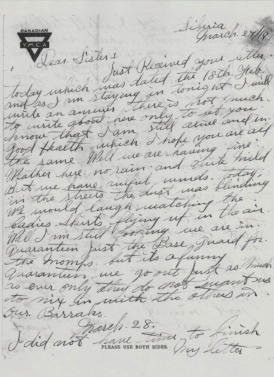
Siberia, March 27th, 1919. [Fifth Letter]
Dear Sister
Just received your letter today which was dated the 18th Feb. and as I
am staying in tonight I will write an answer. There is not much to write
about here only to let you know that I am still alive and in good health
which I hope you are all the same. Well, we are having fine weather
here, no rain and quite mild. But we have awful winds today. In the
streets the dust was blinding. We would laugh watching the ladies’
skirts flying up[ in the air. Well, I am still cooking. We are in
quarantine, just the Base Guard for the mumps. But, it’s a funny
quarantine, we go out just a much as ever, only they do not want us to
mix in with the others in our barracks.
March 28. I did not have time to finish my letter last night, but I will
tell you something about what happened last night. Today, after
dinner, about 1:30 I was walking around the barracks for air. I heard
that there was a dead woman lying in a backyard about two hundred
yards from our barracks. So, of course I had to go and see. She had been
chocked, strangled to death. It was done during the night and she was
still lying there this afternoon. That shows how much they care about
things like that in this country. It was a sight, but nothing like I have
seen here. I will not tell you on a letter but when I will be home I will
tell you.
I will have to close. Give my regards to all. Good night.
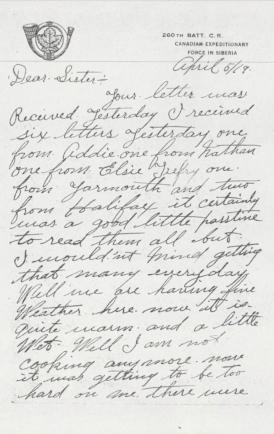
Siberia April 5, 1919 (Sixth Letter]
Dear Sister.
Your letter was received yesterday. I received six letters yesterday, one
from Addie, one from Nathan, one from Elsie Trefry, one from Yarmouth,
and two from Halifax. It certainly was a good little pastime to read
them all, but I wouldn't mind getting that many everyday.
Well, we are having fine weather here now. It is quite warm and a little
wet. Well, I am not cooking any more now. It was getting to be too hard
on me. There were only three of us cooking for two hundred twenty-five
men. That was too much so I began to feel sick, and I kept on working
for a few days longer and one morning I reported sick, and the doctor
put me in the hospital for four days and I did not do anything for a
week. He told me not to go back in the cook house. So, now I am doing
guard outside and I am feeling fine.
How is everything around Arcadia. Did they have any concerts this
winter. … That will not make the Well, we are having pretty good news
about going home. The first boat leaves here one week from today, but
we do not know who is going first period. I hope I'm one, but it looks as
if we will all be away from here shortly. It will be a blessing.
Still, we are having a pretty good time now and the weather is warm,
but I don't like to be among uncivilized people. The base guard which I
belong are not doing very much guard now.
The most we are doing now is patrol all over the town, day,
and night. Today I am guarding a bank with four more fellows.
They have a Bank of Canada. That is the best Guard [duty] I
ever done; inside all the time, sitting on a chair with our rifles
on our knees. Pretty soft. (ha ha).
Well, I will have to close by sending you my best regards and
love. I don't think that you will have to bother answering
because if we are going home soon the answer will not have
time to get here before we are away. Goodnight from E B.
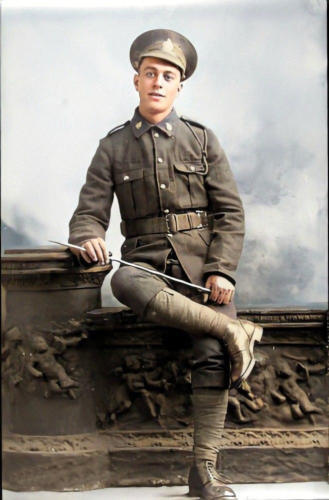
Private Edward Boudreau enlisted at Aldershot Camp, Nova Scotia on June 7,
1918, with the 1st Depot Battalion, Nova Scotia Regiment. On July 3 he was
transferred to Halifax and assigned to the 260th Rifle Battalion as a Cook and
Base Guard for the Siberian Expeditionary Force.
Edward was part of the first contingent of Canadian troops to depart for Russia.
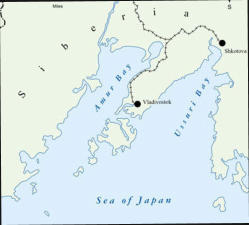
The advance party of 706 troops, sailed on the Empress of Japan from Victoria,
British Columbia, on October 11, 1918. They arrived in Vladivostok, Russia, on
October 26, 1918.
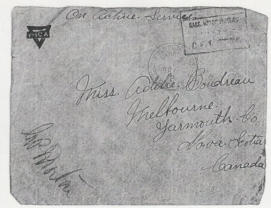
In 1918 and 1919 Edward wrote a series of letters to his sister, and his mother,
that have survived from the war years, describing in detail his wartime
experience as part of the Siberian Expeditionary Force. The following is from
the content of those letters, some forty-four handwritten pages.
The first troops of the 260th Battalion of the Canadian Siberian Expedition
Force boarded the train at Sussex, New Brunswick, to leave for Victoria, British
Columbia.
The previous night the troops were entertained at a concert at the YMCA
building. There had been a roll call 10:00 o'clock. The soldiers had to be up
the next morning at 5:00 am. “It was raining as it always seemed to do, but
it did not rain hard enough to wear our overcoats”. Edward began to write his
first letter as the train departed Sussex station.
Remembrance Page: John Edward Boudreau
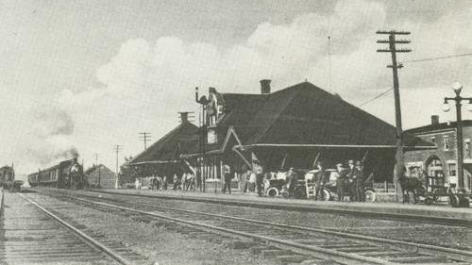
Sussex Railway Station

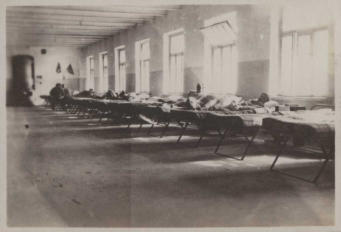
Canadian hospital in Vladivostok
Edward returned to Canada embarking Vladivostok, Russia, on May 9, 1919. He was discharged on demobilization at Halifax on
June 12, 1919.
Notes:
Edgar Surette, (Service No. 3190068) aged 22 at enlistment was from Surette’s Island. He enlisted on August 26, 1918, at
Aldershot. While initially assigned to the Siberian Expedition, he became ill with influenza at Victoria and was hospitalized. He
did not go to Siberia and served in Canada until April 30, 1919.
Frank Edward Pothier (Service No. 3189886) aged 20 at enlistment, was from Wedgeport, NS. He served with the 260th Battalion,
Siberian Expedition.
John Leo Surette (Service No. 3185300) aged 27 at enlistment, was from Pubnico, NS. He served with the 260th Battalion,
Siberian Expedition. At Vladivostok, he was first assigned to Motor Transport.
Norman DeViller (Service No. 3190635) aged 24 at enlistment, was from PInkneys Point, NS. He served in Canada with the 1st
Depot Battalion.
copyright © Wartime Heritage Association 2023











- World War I - Menu
- WWI Stories and Articles
- Photos - Yarmouth Soldiers
- Selection of World War I Songs
- WWI Casualties of Yarmouth, NS
- Those Who Served - Yarmouth, NS
- WWI Casualties Digby Co. NS
- WWI Casualties Shelburne Co. NS
- Merchant Mariners (1915) Yarmouth, NS
- Canadian Forestry Corps - Non Yarmouth Birth/Residence Enlistments
- US Draft Registry - Yarmouth NS Born


- World War II - Menu
- WWII Stories and Articles
- Telegraphist Air Gunners
- WWII Casualties of Nova Scotia
- US Casualties with NS Connection
- Far East/Pacific Casualties with NS Connection
- Merchant Navy Casualties Nova Scotia
- Nova Scotia WWII Casualties Holten Canadian War Cemetery
- D-Day Casualties - Nova Scotia
- CANLOAN Program Casualties - Nova Scotia
- Battle of the Bulge Casualties - Nova Scotia
- WWII Casualties Yarmouth NS
- Yarmouth Casualties - RCAF RAF Canadian Army WWII
- Yarmouth Co., Marriages WWII
- Casualties Non-Born/Residents with Connection to Yarmouth Co., Nova Scotia.
- WWII Casualties Digby Co., NS
- Non-Nova Scotian WWII Casualties Buried in Nova Scotia
- WWII RCAF Casualties Aged 16-18
- Brothers/Sisters Who Served - World War II